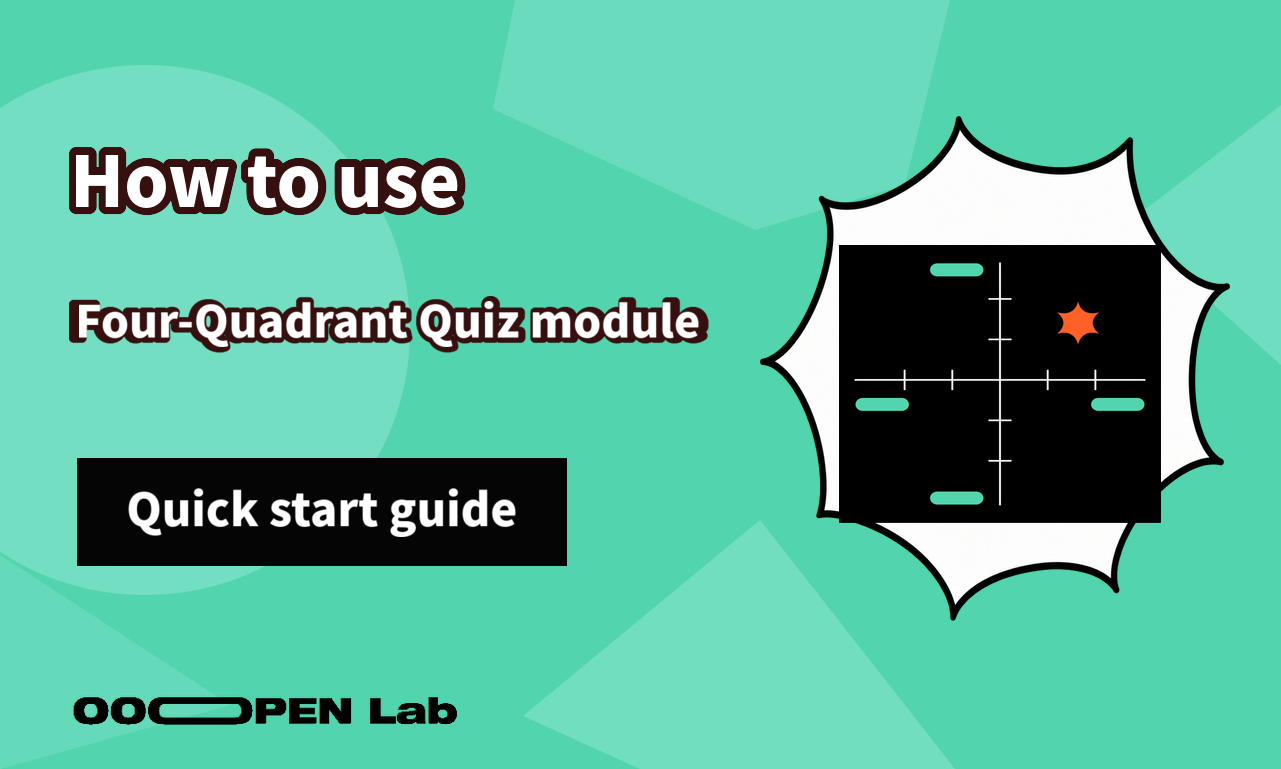
Define two meaningful axes and show each participant where they fall among four positions.
Contents
What you can use it for
A four-quadrant result explains two tendencies at the same time. It can support positioning exercises, learning discussions, community activities, and team workshops where the result plot itself creates a useful conversation. Pick axes that express different ideas and label every direction clearly enough to understand without the author present.
What it looks like
How it works
The question workspace holds the answer flow.
Each choice moves the participant along the configured axes. Score direction must stay consistent from the first question to the last.
The result workspace combines the plotted position with the authored result. Check the plot labels and result title together.
How to get started
- Write the two axes and define both ends of each in neutral language.
- Name the four quadrant combinations.
- Write questions whose choices move only the intended axis or axes.
- Keep score direction consistent throughout the quiz.
- Test extreme answers for all four corners and a balanced path near the center.
- Verify that plot labels, title, description, and share image tell the same story.
FAQ
Can both axes describe the same trait? They should not. The result is useful only when the axes add independent information.
What happens near the center? Test balanced paths and write result copy that does not overstate a weak tendency.
Is this a professional assessment? Not by default. Describe the quiz's intended use and avoid unsupported diagnostic claims.